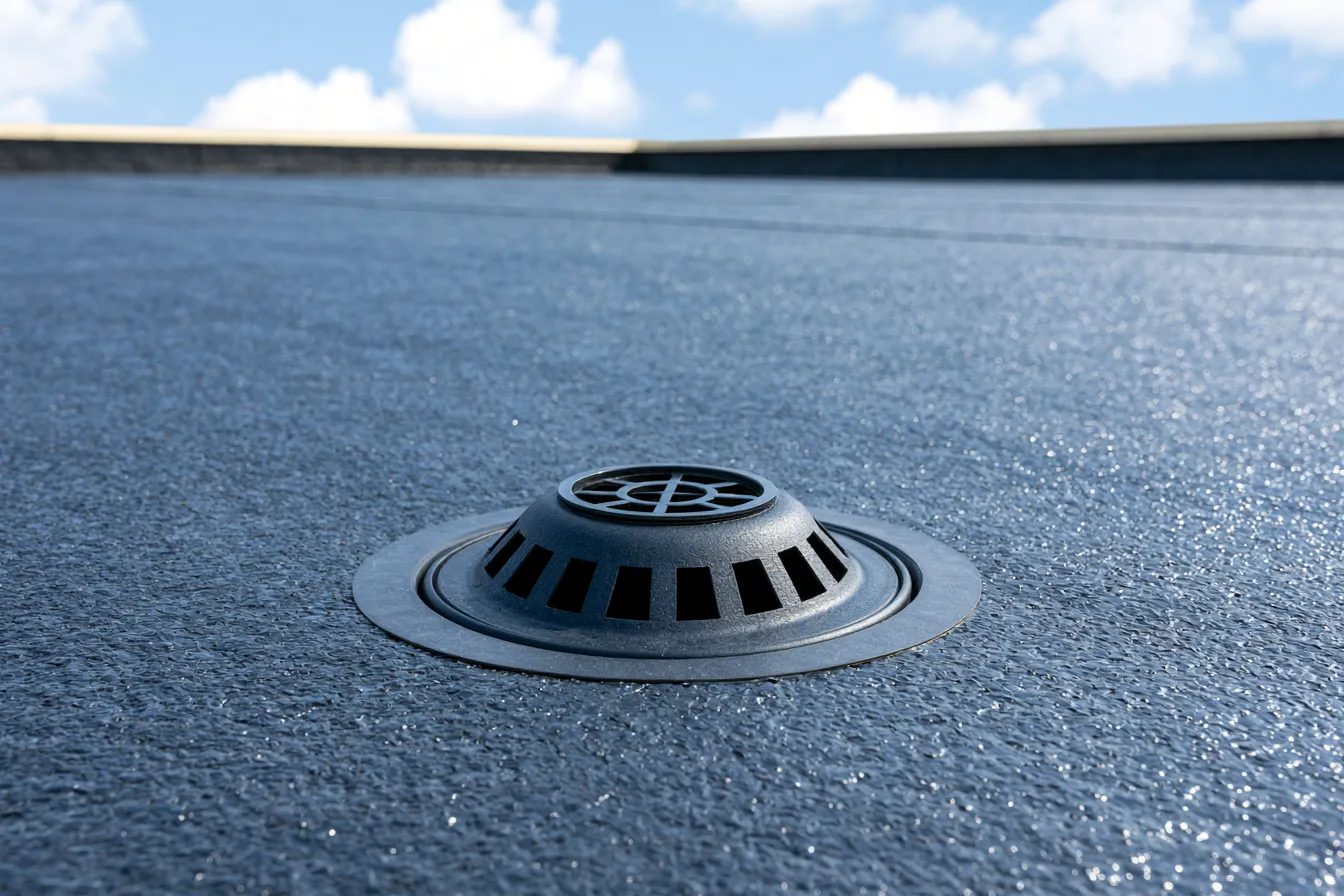
Commercial Roofing in Bixby, OK
Most stores, offices, and light-industrial buildings in Bixby carry a flat or low-slope membrane, not shingles. A local roofer walks it, grades each seam and drain, and documents everything before a number is named.
- Your number in writing before work starts
- The claim explained without the runaround
- The workmanship promise put on paper
Call (918) 296-4141
What commercial roofing in Bixby looks like against a real budget
Commercial roofing in Bixby means a smaller, faster-growing base of buildings than a big-city corridor carries: retail and offices on the Memorial and 121st Street corridors, older storefronts in the Downtown River District, and light-industrial buildings toward the edges. Hardly any of it wears shingles, so these roofs run flat or low-slope.
The deck, drains, seams, and any trapped moisture are logged with dated photos, putting the roof's real condition on record ahead of any number. It begins with a no-cost inspection.
Which low-slope system belongs on a Bixby commercial roof
There is no flat roof that wins outright; the right one depends on the building, on how the deck sheds water, on how often someone is up top tending the rooftop units, on whether a kitchen hood exhausts across it, and on how many more years you intend to hold the property. In hail country, how much punishment the membrane can absorb counts as well. A roofer commits to a system only once the roof has been read and documented. What follows are the low-slope roofs put on and serviced across Bixby buildings, from a growth-corridor storefront to a light-industrial block at the edge of town.
TPO
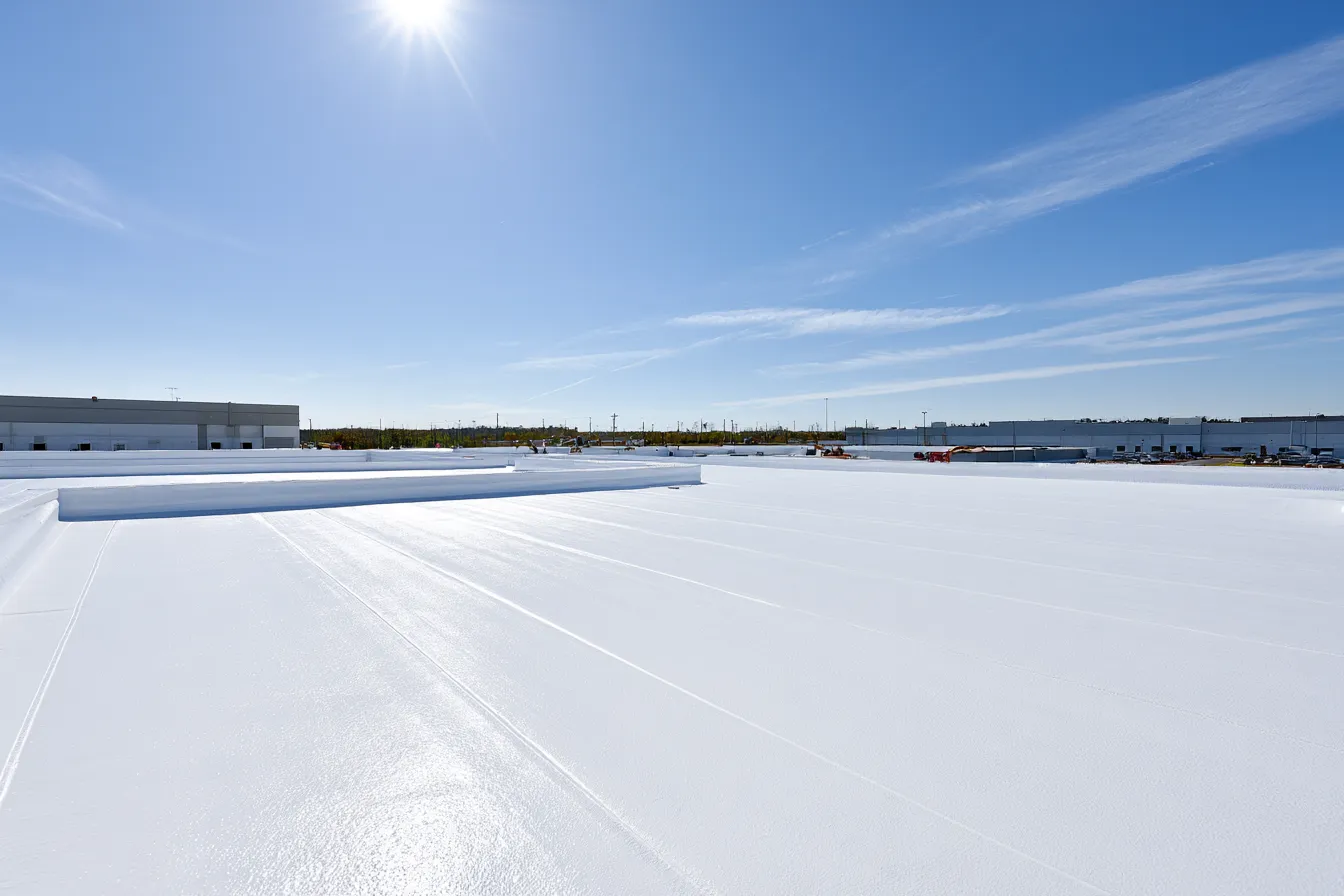
The reflective white single-ply that lands on most of Bixby's newer retail and office boxes. Its sheets are welded edge to edge into one sealed skin, and the bright surface sends the summer sun back up, which keeps the cooling bill on a hot roof from climbing.
EPDM
A rubber membrane chosen for staying power over looks. It asks little and lasts decades across a broad, uncluttered deck, so it fits the warehouse and light-industrial buildings spreading along Bixby's edges.
PVC
A welded sheet built to live with grease and fryer exhaust that eat ordinary membranes alive. A downtown restaurant or any building breathing kitchen air across the roof is where this one pays for itself.
Modified bitumen
Asphalt built up in reinforced rolls, tough underfoot and patient with a corner that drains slowly. It suits the smaller roofs where someone is up top often, servicing rooftop units through the year.
Built-up roof (BUR)
Tar and gravel in stacked, redundant plies, the heavy old method that forgives abuse. It costs more labor than a rolled sheet, but decades of proven service explain why it still tops some of Bixby's oldest commercial buildings.
Roof coatings
A fluid silicone or acrylic skin rolled over an aging membrane that is still solid beneath, restoring reflective years at a fraction of a full tear-off. It only works once the roof tests dry; laid over wet insulation it just seals the water in.
Not sure what is even up there, or how much a rough hailstorm has quietly stripped out of it? That is the whole point of the read: a local roofer identifies the membrane, puts a number on the years it has left, and dates any storm bruising before you have to choose between a repair and a re-roof. For what each route tends to cost by system, the new roof cost guide lays out honest ranges.
What a commercial job actually covers, from a seam to a full re-roof
Nearly every commercial roof job in Bixby falls into one of four buckets. A local roofer places your building in the right one and puts the choice in writing before any crew is scheduled.
- 01Flat-roof repair, kept tight to the failure
- A single fault dealt with on its own rather than the whole roof: a seam beginning to lift, a drain sitting under a puddle, a stretch of parapet flashing gone brittle, or a leak where a rooftop unit meets its curb, each tracked back to whatever membrane is already up there.
- 02A coating, but only where the roof has earned one
- Where the deck beneath the membrane tests dry and solid, a sprayed silicone or acrylic coat freshens the surface and adds years at a small slice of a full replacement. Laid over insulation that has taken on water it merely traps the trouble inside, so the moisture reading comes first, never behind the price.
- 03A full re-roof after the system is spent
- A new low-slope system, single-ply, modified bitumen, or built-up, sized and fastened to hold against the wind that sweeps Bixby's open ground, chosen only when a roof is finished and no patch is worth chasing further.
- 04The plain repair-or-replace call
- Whether a coat is money well spent or a tear-off is the honest answer hinges on four things: how much foot traffic the roof gets, whether water is standing in the insulation, what condition the deck is in, and how long you plan to keep the building. A roofer weighs all four before giving advice, not after the job has been sold.
Hail is no kinder to a flat roof than a pitched one; it merely conceals the damage, since a bruised membrane or a split seam shows nothing from the parking lot. With the Tulsa County record running a high hail count, a local roofer records and dates any bruising on that first visit, then judges whether a claim is worth filing. What a flat roof reveals after a storm is covered on the storm damage page.
How a Bixby commercial roof job runs, start to finish
Read and documented first, one written price, then staged so your doors stay open.
Get the whole roof on record
A local roofer walks the flashing at every rooftop curb, the drains, the welded seams, and the open membrane, then hands back dated photos beside one written figure. Nothing is booked until both sit in front of you.
Stage it around your hours
Repair or full replacement is spelled out in plain terms and scheduled to keep tenants working and the doors open, with the number pinned down before a crew arrives. What follows, and on what schedule, stays your call.
Build it, then verify
The new membrane goes down, or the fix is completed to the written spec, and the seams and drains get a final check before the workmanship terms go on paper for your file.
Bixby commercial roofing questions
What Bixby building owners and property managers ask before a flat or low-slope roof goes on the books.
Q1Is there enough commercial work in a town Bixby's size to take seriously?
Q2How do I know whether to coat the roof or replace it?
Q3A tenant keeps reporting a drip, but the roof is not old. What is going on?
Q4Does insurance cover hail or wind damage on a commercial roof here?
Q5Will the work shut my business down?
Q6Who stands behind a new commercial roof, the manufacturer or the roofer?
Get your Bixby commercial roof scoped and documented
Bring the building to Bixby Roofing Co and a local roofer sizes up the membrane and every weak spot, folds repair or replacement into one written price, and stages the job around your open hours. Nothing starts until you give the word.